

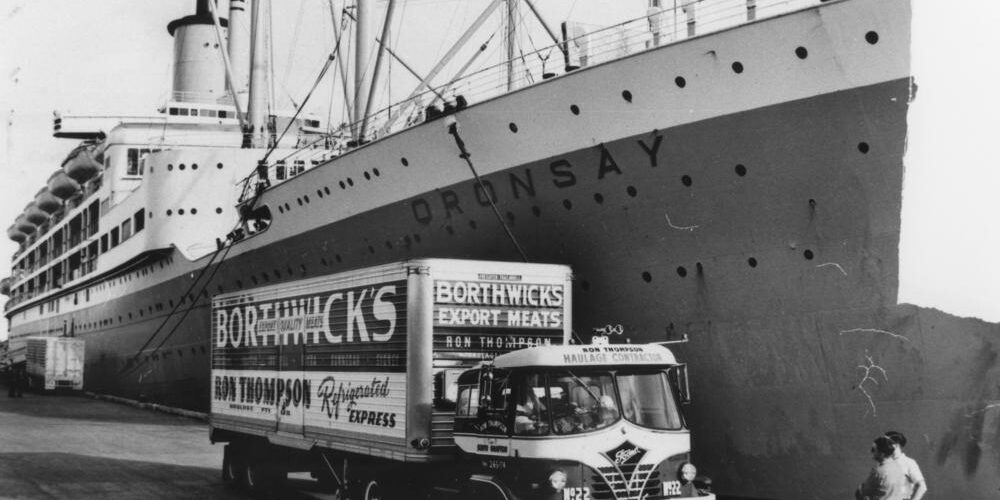
Why Enterprise Systems Need Transfer Buses as Well as Ocean Liners
By Hiran de Silva
For many years I have used a simple illustration to explain one of the biggest misunderstandings in enterprise computing.
Imagine an ocean liner.
It has been beautifully designed. Every system has been engineered. Every process has been tested. It carries thousands of passengers across the Atlantic safely and efficiently.
Now imagine arriving in New York.
The ocean liner cannot drive you to your hotel.
Not because it is badly designed.
Not because it is obsolete.
Simply because that was never its job.
You need a transfer bus.
The bus does not replace the ocean liner. It complements it. Together they complete the journey.
Exactly the same thing happens in enterprise software.
ERP systems are magnificent ocean liners. They are designed to perform a defined set of business processes with extraordinary reliability. But every organisation eventually encounters situations that were never part of the original specification. When that happens, organisations suddenly discover they need a transfer bus.
This article presents one such example.
It also forms the basis of what I call my Budget Review Benchmark Challenge.
The ERP System Is Doing Exactly What It Was Designed To Do
Let’s begin with something that should not be controversial.
An ERP system records business transactions.
It posts debits and credits.
It maintains accounting integrity.
It produces financial reports.
Every transaction is recorded chronologically and accurately.
At month end the accounting period is advanced so that new transactions belong to the following month while reports continue to represent the completed accounting period.
This is exactly how accounting systems are supposed to work.
During the month-end close, Finance processes all the familiar adjustments.
Depreciation.
Accruals.
Prepayments.
Cost reallocations.
Inter-company journals.
Asset disposals.
Shared service allocations.
Countless routine accounting entries that accountants have performed for decades.
Once those have been completed, financial statements are produced.
Everything appears perfectly logical.
Everything appears perfectly controlled.
Everything appears perfectly routine.
And yet, every month, something remarkable happens.
The Monthly Explosion
The accounts are published.
Within hours the complaints begin.
Department managers.
Regional managers.
Country managers.
Operational directors.
Hundreds, sometimes thousands, of budget holders begin questioning their figures.
“My costs are too high.”
“That invoice belongs elsewhere.”
“Those salaries aren’t mine.”
“Something is missing.”
“Something shouldn’t be there.”
Interestingly, most of these managers are not accountants.
They cannot necessarily explain the accounting treatment.
But they know their business.
They know when the numbers do not look right.
And very often they are correct.
Finance investigates.
The majority of reported issues turn out to be genuine.
Not because Finance has made mistakes.
But because the operational managers possess local knowledge that no central finance department can possibly have.
The people running the business understand their business better than anyone else.
That should surprise nobody.
The Correction Problem
Unfortunately, another problem now appears.
By the time many of these issues are identified, the accounts have already been published.
The corrections therefore appear in the following accounting period.
From an accounting perspective this makes perfect sense.
From a business perspective it creates complete confusion.
Managers begin seeing negative salary costs.
Positive depreciation.
Unusual reversals.
Corrections correcting previous corrections.
To accountants these entries are entirely legitimate.
To everyone else they appear absurd.
Trust begins to erode.
Ironically, the published accounts become less believable after every correction.
The Hidden Consequence
The consequences extend far beyond the finance department.
Today’s organisations build dashboards.
Power BI reports.
Executive scorecards.
FP&A analysis.
Trend reporting.
Forecasting models.
Artificial Intelligence.
Predictive analytics.
All of these assume that the underlying data represents business reality.
But what if it doesn’t?
Suppose a dramatic increase in costs is not actually an increase in costs.
Suppose it is simply last month’s correction arriving in this month’s figures.
Suppose declining performance is nothing more than accounting timing.
Beautiful dashboards cannot distinguish between business events and accounting corrections.
They simply visualise whatever numbers they receive.
A colourful dashboard built upon misunderstood numbers remains a misunderstanding.
The Board’s Simple Suggestion
Eventually the Chairman, CEO or Finance Director reaches an obvious conclusion.
“Why don’t we let the budget holders review the accounts before we publish them?”
It sounds perfectly reasonable.
In fact, it sounds obvious.
Allow the managers to inspect their own numbers.
Raise questions.
Correct mistakes.
Then publish accounts that everybody already trusts.
Problem solved.
Or is it?
The Real Bottleneck
This is where the real challenge begins.
Budget holders cannot review draft accounts until Finance has completed virtually all month-end processing.
Ideally, they should review the figures perhaps forty-eight hours before publication.
That tiny window creates an enormous logistical problem.
Potentially hundreds of managers.
Thousands of cost centres.
Tens of thousands of transactions.
Every issue must be raised.
Investigated.
Corrected.
Confirmed.
All before publication.
The accounting problem has become a coordination problem.
Not a technical problem.
A logistical problem.
The Hidden Mountain of Work
Most organisations respond in exactly the same way.
Managers are instructed to review their accounts.
They export reports to Excel.
They examine transactions.
They identify anomalies.
They email Finance.
Finance investigates.
Finance posts journals.
Managers check again.
More emails.
More spreadsheets.
More reconciliations.
More pressure.
Month after month.
The work involved is enormous.
Many managers require additional administrative support simply to participate.
The process becomes an organisation-wide project.
Not because the ERP system failed.
But because the organisation has discovered a business requirement that never existed during the ERP implementation.
This Was Never In The Original Specification
This is the crucial point.
The ERP system has not failed.
It has successfully delivered exactly what it was commissioned to deliver.
Recording transactions.
Maintaining accounting integrity.
Producing financial reports.
The Budget Review process is something entirely different.
It exists because the business has evolved.
The organisation now requires something that nobody envisaged during the original implementation.
This is not unusual.
It is normal.
Businesses change.
Requirements emerge.
Unexpected needs appear.
I refer to this as The Principle of Black Swan Immediacy.
The organisation suddenly discovers an urgent requirement that nobody anticipated.
Not next year.
Not after the next software upgrade.
Now.
This Is Why Transfer Buses Exist
Returning to our transport analogy, the ERP system remains the ocean liner.
It has completed its journey brilliantly.
But now passengers need to reach hundreds of different destinations.
The transfer bus becomes essential.
It does not replace the ocean liner.
It extends it.
Likewise, organisations require something that sits alongside the ERP.
Something capable of rapidly collecting reviews from hundreds of budget holders.
Returning issues to Finance.
Tracking every response.
Confirming every correction.
Providing complete auditability.
Then disappearing once the task has been completed.
The ERP continues doing exactly what it always did.
The transfer bus simply connects the last mile.
The Benchmark Challenge
This is the challenge I now put before the enterprise software community.
Forget product demonstrations.
Forget feature comparisons.
Forget dashboards.
Forget AI for a moment.
Here is the real benchmark.
Your finance department has forty-eight hours before the accounts are published.
Hundreds of managers need to review their figures.
Thousands of issues may be raised.
Every correction must be processed.
Every correction must be confirmed.
Everything must be fully auditable.
And publication cannot be delayed.
How would you solve it?
Not theoretically.
Not after a two-year implementation programme.
Not with another steering committee.
How would you solve it before next month’s accounts are published?
That is the Budget Review Benchmark Challenge.
A Real Story
This challenge is not hypothetical.
It originated in one of my own assignments in 1997.
Over the following twenty-five years I refined the underlying ideas across multiple organisations, each with different industries, different ERP systems and different business processes.
The details changed.
The principle never did.
Every organisation eventually encountered a requirement that had not existed when the ERP was commissioned.
Every organisation discovered that the business needed something more.
Not a replacement.
Not another ERP.
Simply a transfer bus.
The fascinating question is not whether these situations exist.
They do.
The real question is whether we recognise them when they appear, and whether we possess the architectural thinking to solve them quickly.
That, ultimately, is what this benchmark challenge is designed to explore.
Edit
I found the cover photo from a Google search. The ship is Orient Lines (Later P&O) RMS Oronsay. I sailed on this ocean liner from Tilbury Docks, London UK, to Colombo, Ceylon with my parents in 1952, arriving on Christmas Day in Colombo Harbour. The ship was in commission from 1951 to 1975. David Bowie (who had a fear of flying I heard) sailed on it from San Francisco to Yokohama, Japan, in 1975.
Coincidentally, in the foreground is a truck from Australian meat importers Thomas Bothwicks. Australian Mr Graham Galt was their managing director in London 1975. He was the father of my friend Mandy with whom I shared a house. He was something of a mentor to me when I was thinking of going into commerce and considering joiniing a firm of chartered accountants, after a BSc in Chemical Engineering. The photo was taken in Brisbane, Australia.
I have the original ticket for the voyage. It cost 120 guineas for 2 adults and an infant, and found the passenger list for the voyage online.
There are even more coincidences in this story I shall not bore you with!




Add comment