

By Hiran de Silva
One of the most interesting observations I have made over the years is how differently people judge different technologies.
Mention VBA and someone will say:
“I don’t trust code.”
Mention databases and someone will say:
“I don’t trust black boxes.”
Mention AI and someone will say:
“How do we know it’s giving the right answer?”
All perfectly reasonable questions.
But then the same person will open an Excel workbook containing twenty worksheets, thousands of formulas, Power Query, XLOOKUPs, external links, hidden sheets, and perhaps a few macros thrown in for good measure… and think nothing of it.
Why?
Why does Excel get a free pass?
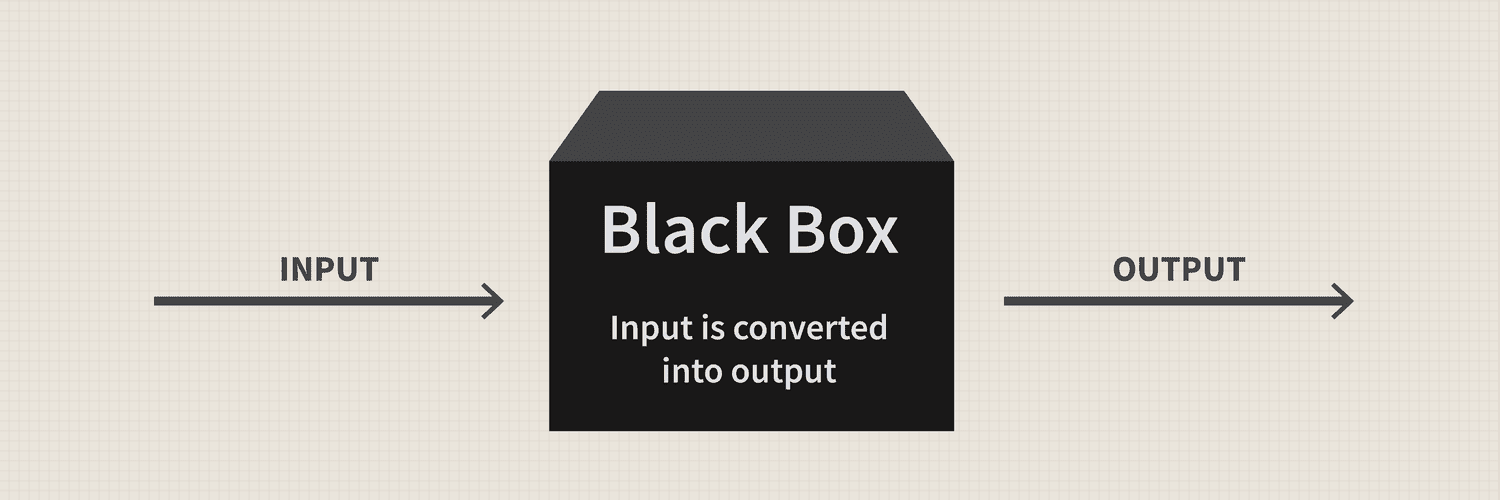
The reality is that every significant business solution is a black box to somebody.
A cloud planning system is a black box.
An ERP system is a black box.
An AI model is a black box.
A spreadsheet can be a black box.
The question should not be:
“Is it a black box?”
The question should be:
“How do we verify the result?”
That distinction is critically important.
The TravelMates Demonstration
One of my favourite examples is the TravelMates demonstration.
The challenge itself is simple.
A company has two types of employees when it comes to travel destinations. Type B are those who like to travel to a place where they have been to before, and Type A are those that want to visit places they have never been to.
This model gives the answer instantly. But it is a black box to most people (except the developers).
On the same sheet is a verification. This simulates and implements how you would verify the result manually – with paper and highlighter pen.
The logic and steps are exactly what you would do with paper and highlighter pen. And you can see that.
Producing an answer is not enough.
A business needs confidence that the answer is correct.
Isn’t this true?
Imagine that Excel did not exist.
Imagine that all you had was paper, a calculator, and a highlighter pen.
How would you solve the problem?
You would examine each traveller’s list.
You would highlight destinations as you found them. Or cross them off.
In other words, you would follow a logical manual process.
The TravelMates verification model does exactly that.
Not approximately.
Exactly.
The verification follows the same sequence of steps that a human being would follow manually.
The process is documented.
The logic is visible.
The intermediate steps can be inspected.
The final answer can be checked.
The Difference Between Two Types of Programming
At this point some people say:
“But both solutions are programming.”
Technically, yes.
But there is an important distinction.
One type of programming says:
“Trust me.”
The answer appears.
The calculations happen somewhere.
The internal workings may be difficult to understand. Hidden.
The result simply arrives.
The other type of programming says:
“Let’s recreate the manual process and document every step.”
The objective is not merely to calculate.
The objective is to demonstrate.
The objective is to verify.
The objective is to make the reasoning transparent.
That is a very different philosophy.
Accountants Solved This Problem Hundreds of Years Ago
This idea is not new.
Accountants solved it centuries ago.
Double-entry bookkeeping exists to record the other side of a business transaction. That way a recorded transaction can be verified because the two records balance. That is, net to zero.
The principle is simple.
Trust is earned through verification.
Not through blind faith.
Enterprise Systems Should Be Designed This Way
In my view, every significant business solution should include an independent verification process.
Whether it is Excel.
Whether it is Power Query.
Whether it is SQL Server.
Whether it is an ERP system.
Whether it is AI.
The technology is not the issue.
The issue is whether the result can be independently validated.
If a model produces a result that cannot be checked, then trust becomes difficult.
If a model produces a result that can be verified through a separate process that mirrors real-world logic, trust increases dramatically.
That is what the TravelMates demonstration is really about.
It is not a lesson about VBA.
It is not a lesson about databases.
It is not even a lesson about Excel.
It is a lesson about trust.
The Bigger Question
The next time somebody tells you they do not trust a particular technology because it is a black box, ask them a simple question.
“How do you verify the result?”
Because every enterprise system is a black box to somebody.
The real issue is not whether a black box exists.
The real issue is whether there is a reliable way to verify what comes out of it.
And that, ultimately, is where trust comes from.



Add comment