

Transparency, Relevance, and the Two Worlds of Excel
By Hiran de Silva
After more than forty years of spreadsheets in business—and nearly as long for Excel specifically—it is remarkable how little independent, comparative, outcome-based research exists on how Excel is actually used, who it serves well, who it fails, and why.
This article announces the launch of a major, long-term research programme into Excel usage, techniques, education, and narratives across the entire business and professional ecosystem.
This is not a product launch.
Not a course.
Not a critique dressed up as marketing.
It is a systematic evaluation of what works, for whom, in what circumstances—and what does not.
Quietly. Methodically. With evidence.
Why This Research Is Long Overdue
Excel has been embedded in business for decades. During that time, an entire industry has grown around it:
- Training providers
- Certification bodies
- Social-media educators and influencers
- Consulting firms
- FP&A and “Excel replacement” vendors
- Risk and governance specialists
- Academic researchers
Each group speaks confidently about Excel.
Each group makes claims.
Each group promotes techniques, warnings, or solutions.
Yet there is almost no shared framework for answering a simple question:
Which Excel techniques are appropriate for which purpose—and which are not?
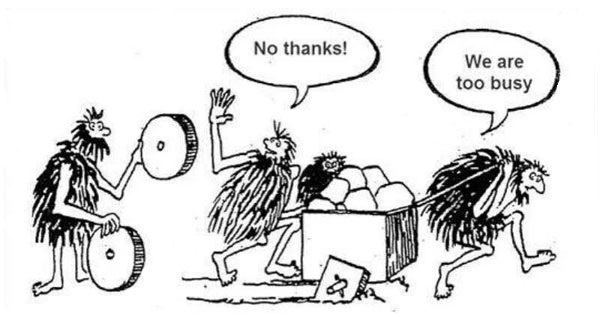
The Wheel Analogy: Obvious in Theory, Confusing in Practice
Consider something as fundamental as a wheel.
Many shapes could be proposed:
- Square
- Triangular
- Octagonal
- Perfectly round
Different people, with different incentives, might argue passionately for each.
But through evaluation and experience, civilisation learned something simple:
For most purposes, wheels need to be round.
In Excel, that clarity does not exist.
Techniques are promoted without context.
Popularity is confused with suitability.
Views and engagement substitute for outcomes.
And as a result, misapplication is rife.
The Spectrum This Research Will Cover
This research programme evaluates Excel usage across all major interest groups, including:
- Basic and intermediate Excel users
- Advanced and expert Excel practitioners
- Social-media educators and influencers
- Business leaders and decision-makers
- Finance leaders, FP&A, and accounting management
- Large and small organisations
- Academic institutions and professional bodies
- Certification providers
- Financial modelling institutes
- Vendors promoting “Excel replacement” platforms
No group is excluded.
No group is assumed to be right.
Claims will be examined through:
- Demonstration
- Replication
- Stress testing
- Contextual evaluation
- Independent review by relevant stakeholder groups
Popular Does Not Mean Fit for Purpose
One of the most important observations driving this research is the disconnect between popularity and utility.
There are Excel techniques:
- Viewed hundreds of thousands—or millions—of times
- Surrounded by overwhelmingly positive comments
- Praised for production quality and presentation
Yet:
- They do not work as claimed
- Or they only work in narrow, non-enterprise contexts
- Or they actively fail when applied to real business processes
In some cases, users have pointed this out publicly—only to be ignored or deflected.
This research does not judge intent.
It evaluates outcomes.
Social Media Metrics vs Business Reality
Different audiences optimise for different outcomes:
Social Media Educators
- Engagement
- Views
- Likes
- Subscriptions
- Trendability
Business & Finance Leaders
- Process efficiency
- Scalability
- Reach
- Collaboration
- Consolidation
- Maintainability
- Cost of ownership
- Risk and robustness
A technique can be a perfect success in one world and a serious failure in another.
This research makes that distinction explicit.
The Excel Replacement Industry Under the Microscope
A central pillar of this research examines claims made by the Excel replacement industry—particularly assertions that Excel:
- Is not scalable
- Has no reach
- Cannot support collaboration
- Cannot consolidate reliably
The research will ask:
- Under what conditions are these claims true?
- What assumptions are being made about Excel usage?
- What alternatives are proposed?
- How do those alternatives perform in real finance and business environments?
- How do experienced Excel practitioners and Microsoft themselves respond to these claims?
This is not ideological.
It is empirical.
Spreadsheet Risk: A Re-examination
Spreadsheet risk narratives trace largely back to the foundational work of Ray Panko, whose early studies highlighted error prevalence in spreadsheets.
Those findings shaped an entire risk industry.
But Excel has evolved.
Usage patterns have evolved.
Capabilities have evolved.
This research re-examines:
- What remains valid
- What is outdated
- What has been misapplied or overgeneralised
The Two Worlds of Excel
This programme begins with a clear hypothesis—one that will itself be tested:
There are two distinct worlds of Excel.
World One
- Excel as content
- Excel as entertainment
- Excel as social media
- Excel as isolated, individual productivity
World Two
- Excel as part of an end-to-end business process
- Excel in finance, operations, and management
- Excel embedded in scalable, collaborative systems
The working assumption is that:
- Most education targets World One
- World Two is largely ignored
- That vacuum is then exploited by Excel replacement narratives
- And the misapplication of World One techniques in World Two creates what is labelled “Excel Hell”
This research exists to test, validate, refine—or refute that claim.
How This Will Be Conducted
- Quietly, initially
- Without hype or razzmatazz
- With documented examples and evidence
- With participation from multiple interest groups
- With transparency about methods and findings
Only once meaningful results exist will the research be shared more widely.
The Intended Outcome
The goal is simple, but profound:
To make Excel technique selection a “no-brainer” based on context—just like wheel shape.
When that happens:
- Bad techniques will lose power
- Good techniques will find the right audience
- Misleading narratives will struggle to survive
- Organisations will make better decisions
And the entire ecosystem benefits from clarity instead of conditioning.
An Open Invitation
If, reading this, you can already see:
- Angles not yet mentioned
- Stakeholders not yet listed
- Questions that should be tested
They are welcome.
This research is not about winning arguments.
It is about illuminating reality.
And it starts now.




Add comment