

And Why One-Step Excel Challenges Miss the Point
By Hiran de Silva
The Global Excel Airbus Challenge is deliberately multi-level.
That is not a gimmick. It is the core educational design goal.
To understand why, we first need to look at how Excel challenges are normally presented on social media — and what is missing from them.
The Limits of One-Step Excel Challenges
Most Excel challenges on social media are single-level, single-step exercises.
An instructor presents a problem.
They immediately demonstrate their solution.
The audience watches, perhaps asks a question, and then moves on.
Sometimes people ask follow-up questions. Often those questions are ignored, brushed aside, or implicitly treated as irrelevant. Yet those questions frequently come from what I call “the audience within the audience” — people whose responsibilities, aspirations, and real-world constraints go beyond the design goals of the video itself.
The video was never built for them.
And crucially, something else is missing entirely.
What’s Missing: Review, Reflection, and Peer Evaluation
What is almost never present in social-media Excel challenges is review.
- Review of one’s own solution
- Review of one’s assumptions
- Review of one’s mindset and architectural choices
- Peer review by others who are solving the same problem
Yes, there is sometimes an opportunity to compare your thinking with the instructor’s demonstration — especially when the solution appears immediately in the same video. Oz du Soleil’s challenges are a good example of this.
That comparison can be useful.
But comparison is not evaluation.
What is missing is the deeper discussion:
- Where does this approach work?
- Where does it break?
- What assumptions does it rely on?
- What happens when conditions change?
- Is part of this solution already superseded by something simpler or more robust?
I have never seen a collective, structured peer review of solutions on popular Excel challenges — nor even individuals openly reviewing and critiquing their own approach.
And yet, this is where the real learning is.
Why Multi-Level Challenges Exist
The Global Excel Airbus Challenge exists to force that review process to happen.
It does this by design.
A multi-level challenge creates a situation where:
- A solution that works perfectly at Level 1
- Begins to strain at Level 2
- Becomes fragile at Level 3
- And eventually fails at Level 4
Not because the participant is incompetent — but because their initial thinking and architecture were short-sighted.
That moment of failure is not a mistake.
It is the lesson.
The Airbus Metaphor: Scaling Reveals the Truth
The Airbus scenario makes this tangible.
- Level 1: A single charter flight
- One aircraft
- One cabin layout
- People booking seats, maybe choosing who they sit next to
Everything feels manageable.
- Level 2: The flight is fully booked
- Additional flights are required
Now we encounter scale.
- Level 3: Still manageable — until we add variation
- Different aircraft
- Different cabin layouts
At this point, many earlier design choices quietly collapse.
What worked before no longer works reliably.
And this mirrors the real life cycle of spreadsheets.
The Spreadsheet Life Cycle (And Where Excel Hell Comes From)
Spreadsheets do not usually “break” because Excel is weak.
They break because:
- The original architecture was flawed
- The data structures were short-sighted
- Scalability, variation, collaboration, and consolidation were not anticipated
As a result, the spreadsheet evolves into:
- Patchwork
- Band-aids
- Sticky tape
- Duct tape
Fragile adjustments layered on top of fragile adjustments — until the workbook becomes complex, brittle, and impossible to reason about.
This is what people later call Excel Hell.
And in the multi-level challenge, you don’t need to be told this.
You experience it.
Why Experience Matters More Than Explanation
There is no point simply telling people:
“You need to think differently.”
The only way this lesson truly lands is when someone:
- Hits a brick wall
- Realises their solution cannot adapt
- Understands why it cannot adapt
If you are new to collaborative or enterprise-level spreadsheets, you will make these mistakes — and that is precisely the point.
The challenge allows you to:
- Discover the limits of your thinking
- See where your assumptions fail
- Learn what a different architectural approach looks like
Not theoretically — but experientially.
Patch or Re-Architect: The Fork in the Road
When the brick wall appears, there are two choices:
- Patch and fudge
- Add more formulas
- Add more complexity
- Create more Excel Hell
- Step back and re-architect
- Reconsider data structures
- Reconsider separation of data and logic
- Reconsider scalability and variation
Individuals on short-term contracts might choose the first path — because the consequences arrive after they’ve left.
But bosses, finance leaders, and senior decision-makers do not have that luxury.
They inherit the long-term consequences of short-term thinking.
Tables Are Not the End of the Conversation
Yes — data belongs in tables.
Everyone agrees on that.
From Mark Proctor to Mynda Treacy to anyone teaching Excel:
“Put your data in tables.”
But the real question is not whether data is in tables.
It is:
- What structure?
- What assumptions?
- Where does the table live?
- How will it support variation, scale, and change?
This is where architectural thinking begins — and where most training stops.
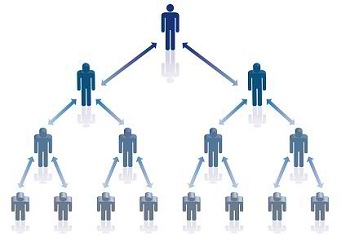
And this, inevitably, leads to the hub-and-spoke discussion that underpins the entire Global Excel Airbus series.
What This Piece Is — And Is Not
This piece is not about tools.
It is not about formulas.
It is not about clever tricks.
It is about:
- The life cycle of spreadsheets
- Why they break
- And why they break predictably
They break because we did not think correctly at the outset.
The Global Excel Airbus multi-level challenge exists to make that visible — not through lectures, but through experience.
In Summary
The Global Excel Airbus Challenge is multi-level because:
- One-step challenges hide architectural consequences
- Real learning requires review, reflection, and failure
- Spreadsheet fragility is born at the foundation, not at the end
- Multi-level progression exposes flawed thinking naturally
- Experience teaches what explanation never can
This piece accompanies the Global Excel Airbus Challenge series to explain why the structure exists — and why multi-level thinking is essential if Excel is to be used responsibly at scale.




Add comment